
By Katy Gorsuch

Super Pink Moon over Chesapeake Beach by Robert Fawcett, DNR Photo Contest 2021. The full Pink Moon was April 26 in 2021.
The weather’s warming and the sunlight is lengthening, leading us all to spending more time outside. Continuing our exploration of the diverse and wonderful ecology of Maryland, we turn to the ephemeral spring moons and all they represent!
Recorded in English as far back as 1779, Indigenous peoples of the Americas have named the full moons, often in alignment with animals responding to the changing seasons, or locally important events.
Full moon names varied widely depending on geographic location and language family amongst Native Americans. Also, some folk names for the full moons were created by European settlers or have even developed only in the past hundred years.
For our purposes, using supposed Algonquian full moon names as a starting point provides a wonderful opportunity for us to explore Maryland’s unique wildlife, and how the seasons change!
Spring Moons:
April____________________________________________________________
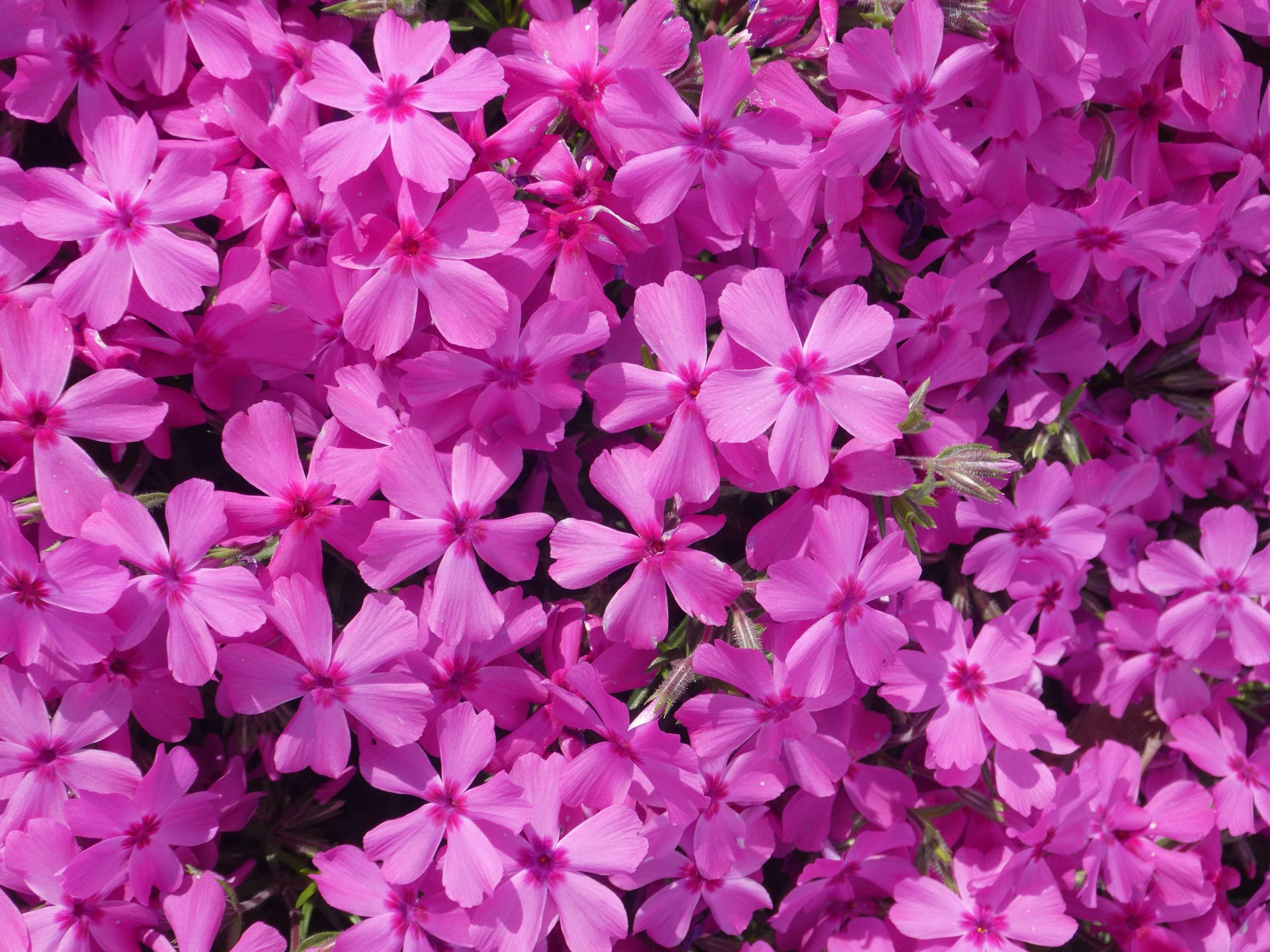
Pink Creeping Phlox by Robert Severynse, DNR Photo Contest 2020
This moon is often called the Pink Moon, which has been attributed to the blooming of moss phlox (Phlox subulata) or the closely related creeping phlox (Phlox stolonifera). Another possible name for this moon may be the Breaking Ice Moon, so called for the warming of spring.
Both phlox plants have gained recent attention as wonderful options to replace traditional lawns, as they tend to be a low-maintenance and low-profile groundcover, and a native plant that appeals to humans and pollinators alike. And while they are certainly at the peak of their blooms in April, they can bloom as early as February in Maryland, depending on the local conditions, and may produce flowers intermittently into September.
Phlox isn’t the only native plant species that blooms a vivid pink.
Redbud (Cercis canadensis), a small to medium native tree, is another Maryland plant that blooms in April. Its vivid magenta flowers rival even the famous cherry blossoms in their showy colors! A gentler pink can be found in Southern crabapples and sweet crabapples, both of which support pollinators and other native wildlife.
Wild geranium (Geranium maculatum) begins blooming in April, although it may be argued that it tends to be more on the purple side. Early azalea (Rhododendron prinophyllum) blooms in the mountains beginning in April as well, living up to its name!

Cercis Canadensis Flowers by Robert Severynse, DNR Photo Contest 2021
Many native plants, like flowering dogwood (Cornus florida), stop at pink on the way to white flowers, or mix pink and white like the pinxter flower (Rhododendron periclymenoides). As a bonus, the flowering dogwood also produces lovely red leaves in October and November and red berries birds enjoy in the fall/winter, providing color throughout the year.
In fact, if you were so inclined, you could have native pink flowers blooming in your garden for the whole growing season!
Pink-Flowered Native Plants of Maryland
*indicates pink through purple colorations
⚘indicates pink buds resolving to another color
❣indicates pink through white variations
Notably, there are several invasive plants that bloom pink in April, and so are easier to remove due to their visibility, such as Common Vetch and Incised Fumewort.
Suggested Pink Moon Activities: Plan your garden to include more native flowers!
If pink isn’t your color, choose another color and use the new Maryland Native Plant Guide Piedmont Region guide, or the USFWS Native Plants for Wildlife Habitat and Conservation Landscaping: Chesapeake Bay Watershed to plan your garden.
Consider converting at least a part of your lawn to moss phlox this year! It doesn’t grow high – six inches is about the maximum height, which means far fewer sweaty days cutting away at non-native grasses that commonly make up lawns.
If phlox isn’t your aesthetic choice, check out our groundcover guide; there are many options to choose from if you’d like to forego mowing in the hot summer sun!
For more information, even more groundcover options, see the read this University of Maryland Extension article on groundcover options.
May_____________________________________________________________
Flower Moon
Explorer Jonathan Carver, writing in 1779, cited May as the Flower Moon, and the name was supposedly common to several Indigenous peoples of the northern states. By May, many flowers are blooming across Maryland’s diverse ecosystems!
We’ve discussed before the way flowering plants use scent and color to attract pollinators, but one of the less visible (to humans) elements of flower color can be their use of colors only seen under ultraviolet light. Human range of vision does not include much of the UV section of the electromagnetic spectrum, but many pollinators, including bees and butterflies, can see in wavelengths invisible to humans.
The range of color seen by bees is sometimes referred to as “bee purple,” and while we cannot see in this spectrum, researchers have come up with many ways to visualize the patterns flower produce to draw pollinator attention to the flower’s pollen and nectar.

Brandon Antonio Segura Torres & Priscilla Vieto Bonilla, CC BY-SA 4.0, via Wikimedia Commons. Photos of black-eyed susans taken using a bandpass filter to show UV patterns.
May is Gardening for Wildlife Month – a great time for contemplating how the flowers in your garden affect our native pollinators. Native flowers support more than just butterflies; many native moths, birds, and bees all feed directly directly from them, and bats, birds, frogs, and more eat the insects that feed off them! During the time of year when many bird species are raising their chicks, the protein of insects is a key element to their rapid growth. 96% of terrestrial birds feed an insect diet to their babies, and research shows it takes 6,000-9,000 insects to raise a single brood of Carolina chickadees.
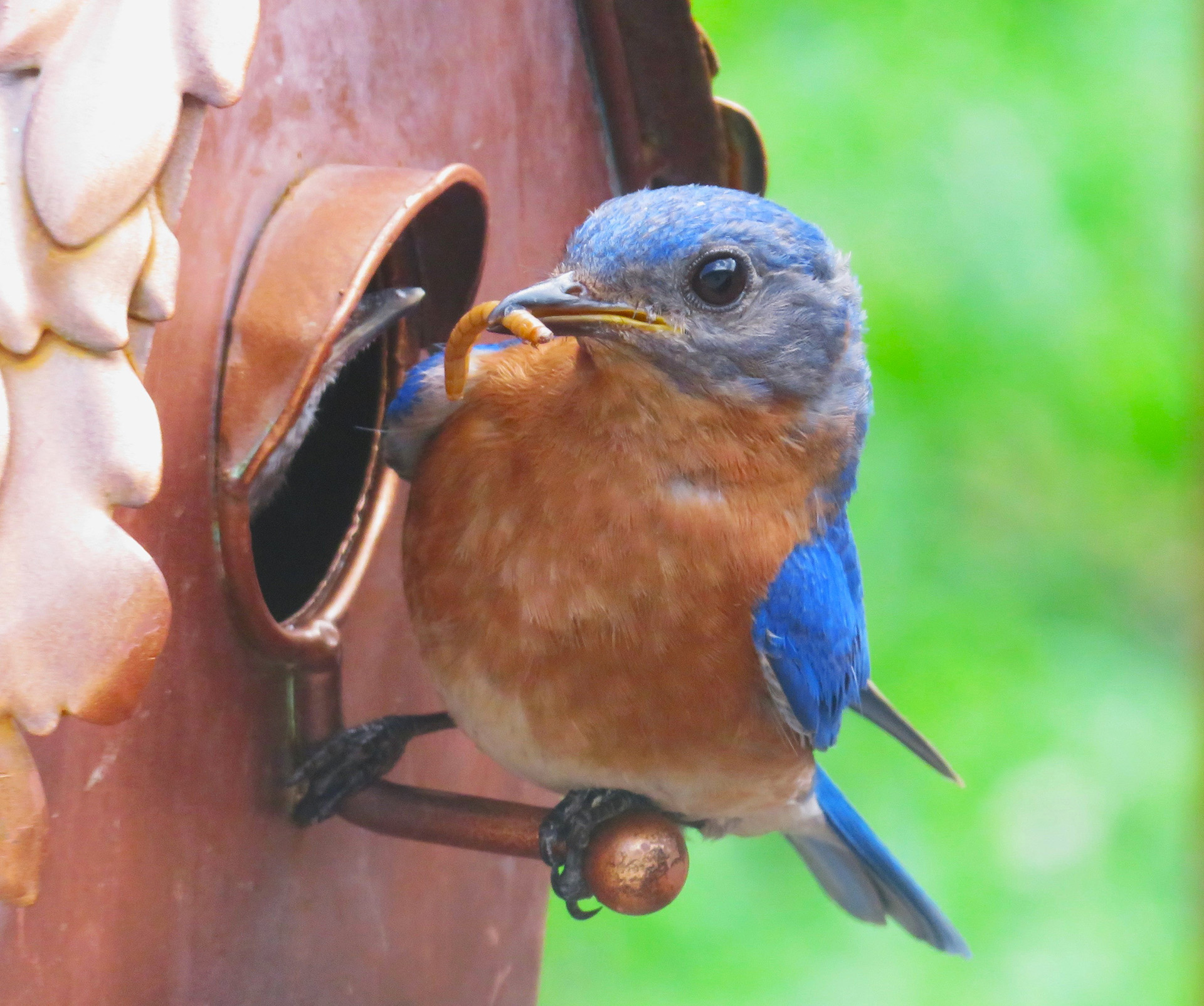
Blue Bird feeding time Rosedale Yannayon, DNR Photo Contest 2023
Suggested Flower Moon Activities: Continuing to work on your garden is an easy sell in the beautiful weather of May, so we’d like to challenge you to go one step further; replace an ornamental flower with a native flower or offer to plant one for a neighbor (bringing potted native flowers to your coworkers counts, we’ve decided).
If that doesn’t strike your interest, join the Cornell Lab of Ornithology in their Garden for Birds project, or get your yard certified as wildlife habitat with the National Wildlife Federation through the National Aquarium, or a Bay-Wise certification through UMD Extension. Read more about each habitat certification program here.
Learn more about gardening for wildlife here at the Wild Acres website!
June____________________________________________________________
Strawberry Moon, Hot Moon
June has been referred to as either the Strawberry Moon or Hot Moon, depending on the source. While the humble North American strawberry species are always a worthy topic, thinking about water sources early in the season may prevent a hot month from becoming a sweltering one.
For wildlife, even a small amount of water can mean the difference between a suburban or urban habitat being tolerable or a desert. Backyard ponds are more familiar, but bird baths, puddling stations for bees and butterflies, rain gardens, and water drips are also all worthwhile features, and can be more manageable for many of us without the space, time, or ability to maintain a pond.
A common concern for standing water features is the possibility of creating a mosquito breeding location. For locations where the water is changed frequently, like a puddling station or bird bath, this is less of a concern; mosquito eggs need still water to hatch, and the larvae live in water until they are fully developed. This means that adding a pump, fountain, or waterfall feature to a pond can prevent larvae from surviving.
For locations where this isn’t possible, larvae can be controlled using Bacillus thuringiensis israelensis (Bti) or Bacillus sphaericus (B. sphaericus). These are bacteria that act on mosquito larvae’s ability to digest food, thus killing the larvae, but leaving other animals and people unharmed. Avoid using pesticides around water features; these kill more than the targeted species of insect and can be consumed by birds, amphibians, reptiles, and fish that may inhabit or drink from the water source.
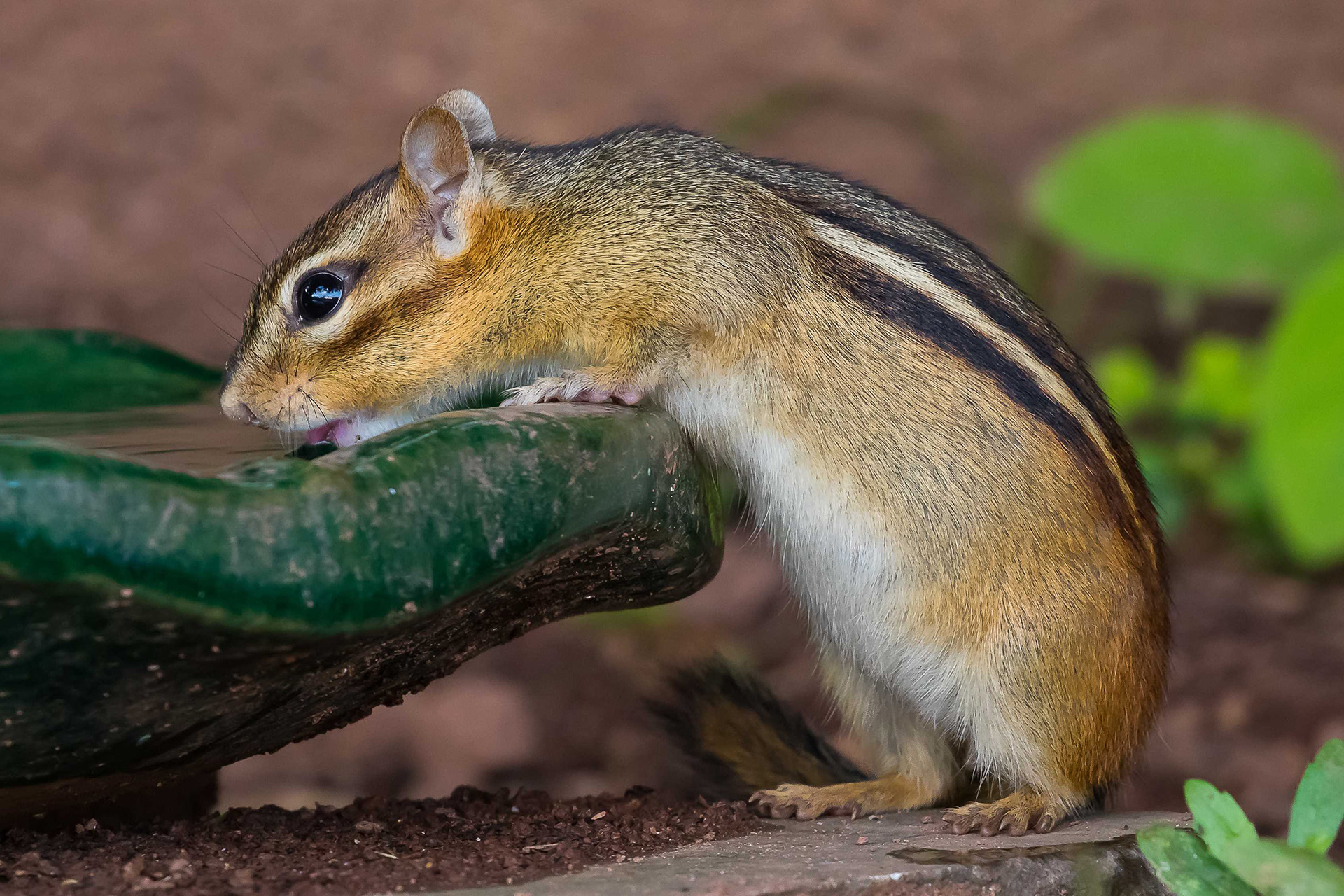
Tiny Thirsty by Sharon Sexton, submitted to Maryland DNR Photo Contest 2019
Suggested Hot Moon Activities: Make sure your outdoor space has a water feature! Choose and install one that is easy for you to maintain, and place it somewhere quiet. Puddle containers and bird baths don’t need to be expensive – a large ceramic bowl from a thrift store or unused clay pot bottom is just as effective and easier to clean than some more costly options.
For other ways to help wildlife this spring, check out our Wild Acres resources!